Gratitude meditation might be the simplest and most effective form of meditation. It requires no technique — just recall something you're grateful for.
Sit down, close your eyes. Take a few deep breaths to quiet yourself.
Now, recall something you're grateful for. It can be small — that hot cup of tea this morning, a flower you saw on the way, a message that made you smile. Or it can be big — a healthy body, people who love you, work that gives you a sense of accomplishment.
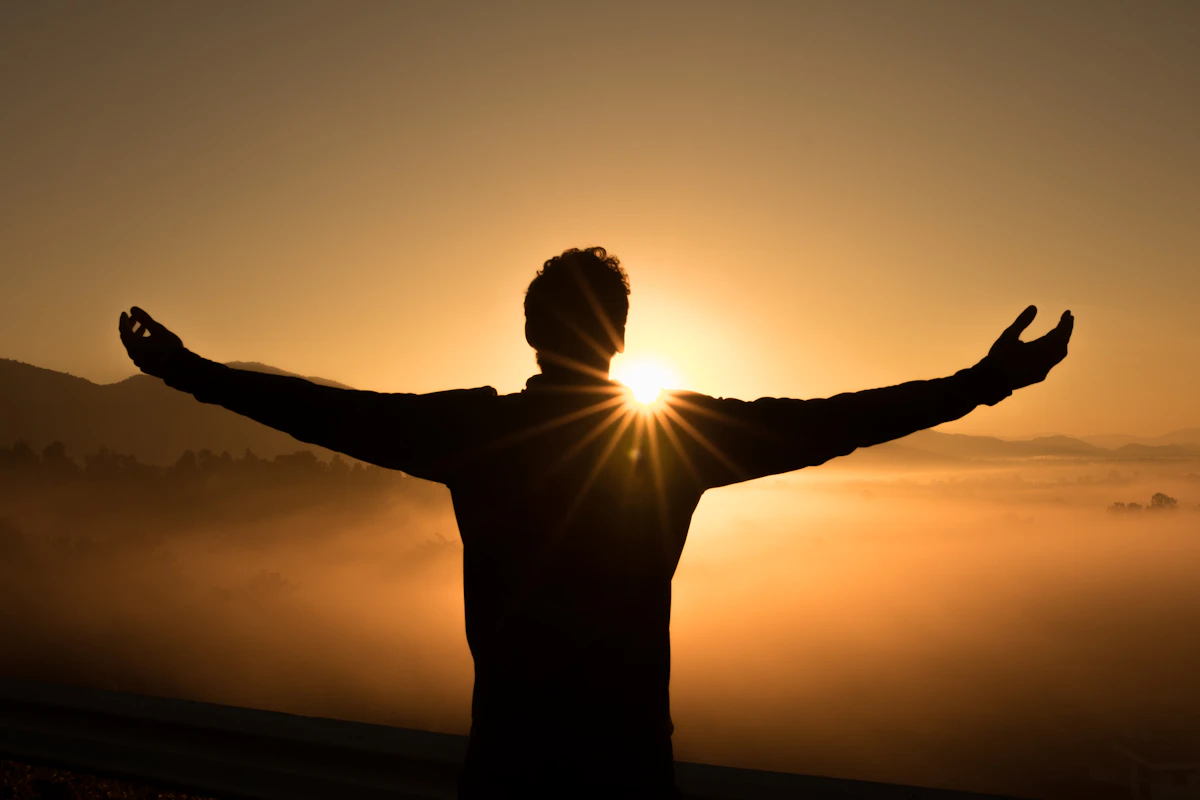
Don't just "think about" it — try to "feel" it. The warmth of that tea, the color of that flower, the moment that message made the corners of your mouth rise. Let that feeling fill your chest.
Research shows that people who practice gratitude daily increased their happiness index by 25% after 6 weeks. This isn't mysticism — it's because our brains are naturally wired to focus on negative information (an evolutionary survival mechanism), and gratitude practice helps us consciously balance this bias.
When you feel gratitude, notice your body's response. Many people feel warmth in their chest, deeper breathing, an involuntary smile. That's the physiological effect of gratitude — it's genuinely changing your body.
Finally, try saying "thank you" to yourself. Thank you for giving yourself these few minutes in your busy life. Thank you for being willing to try a different approach to living.
You deserve to be thanked — including by yourself.